It was my great privilege to be sworn in as a member of
the bar by United States Supreme Court Justice William O. Douglas in 1974. Justice
Douglas was a larger than life personality. Appointed to the Court by FDR, he
was the longest serving Supreme Court justice in history (1939 - 1975). He was a
strong advocate for individual and environmental rights. He was from Washington
state, and an avid outdoors man; a peripatetic. He was married four times. As a
young liberal lawyer, he was a hero of mine. One of his most famous opinions is
his passionate dissent in Sierra Club v.
Morton (1972), where he argued that nature should be entitled to sue for
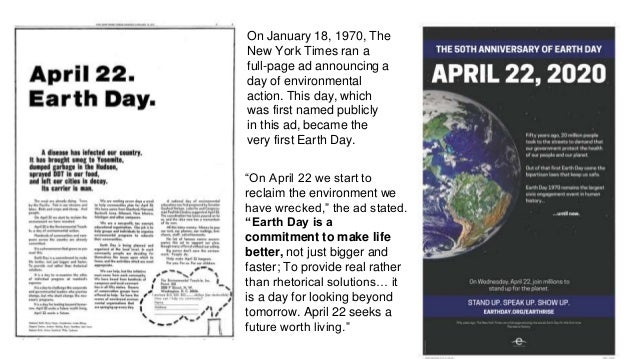
injury. Given the various posts and comments regarding Earth Day, it is worth
reading some of his dissent.
The Sierra Club was formed and acted to protect and
conserve the national resources of the Sierra Nevada Mountains. It sued the U.
S. Forest Service to block development of a ski resort by the Disney company. The
District Court held that the purpose of the Sierra Club made it "sufficiently
aggrieved" to have "standing" to sue on behalf of Mineral King
(the area to be developed). The Supreme Court, however, rejected the lawsuit on
the basis that the Sierra Club lacked “standing.” To have standing under the
Constitution, a party must allege a specific injury to a legal interest it has
in order to maintain the suit.
In his famous dissent, Justice Douglas argued that trees
should have standing. Douglas advocated for a federal rule that would allow for
litigation “in the name of the inanimate object about to be despoiled, defaced,
or invaded by roads and bulldozers and where injury is the subject of public
outrage.”
“Inanimate objects
are sometimes parties in litigation. A ship has a legal personality, a fiction
found useful for maritime purposes…. The ordinary corporation is a
"person" for purposes of the adjudicatory processes, whether it
represents proprietary, spiritual, aesthetic, or charitable causes. So it
should be as respects valleys, alpine meadows, rivers, lakes, estuaries,
beaches, ridges, groves of trees, swampland, or even air that feels the
destructive pressures of modern technology and modern life. The river, for example, is the living symbol of all the
life it sustains or nourishes -- fish, aquatic insects, water ouzels, otter,
fisher, deer, elk, bear, and all other animals, including man, who are
dependent on it or who enjoy it for its sight, its sound, or its life. The river
as plaintiff speaks for the ecological unit of life that is part of it. Those
people who have a meaningful relation to that body of water -- whether it be a
fisherman, a canoeist, a zoologist, or a logger -- must be able to speak for
the values which the river represents, and which are threatened with
destruction.”
Inanimate objects still do not have standing, but
environmental litigation proceeds if they have a co-plaintiff with a legitimate
legal interest.
Week's postings:
On 4/19, posted comment to
discussion question
On 4/19, posted comment on
Phil’s post on Battered Bastards
On 4/19, posted comment to
Jamil post on A. Finn
On 4/19, posted comment to
discussion question
On 4/22, posted Science +
Religion on blog
On 4/22, posted as a
comment to Science + Religion
On 4/22, posted Can Trees
Sue? on blog
On 4/22, posted reply to
Earth Day comments
“We die. That may be the meaning of life. But we do language. That may be the measure of our lives.”