--Carl Sagan, Billions & Billions: Thoughts on Life and Death at the Brink of the Millennium
Wednesday, December 20, 2023
Look Death in the eye and be grateful every day
“I would love to believe that when I die I will live again, that some thinking, feeling, remembering part of me will continue. But as much as I want to believe that, and despite the ancient and worldwide cultural traditions that assert an afterlife, I know of nothing to suggest that it is more than wishful thinking. I want to grow really old with my wife, Annie, whom I dearly love. I want to see my younger children grow up and to play a role in their character and intellectual development. I want to meet still unconceived grandchildren. There are scientific problems whose outcomes I long to witness—such as the exploration of many of the worlds in our Solar System and the search for life elsewhere. I want to learn how major trends in human history, both hopeful and worrisome, work themselves out: the dangers and promise of our technology, say; the emancipation of women; the growing political, economic, and technological ascendancy of China; interstellar flight. If there were life after death, I might, no matter when I die, satisfy most of these deep curiosities and longings. But if death is nothing more than an endless dreamless sleep, this is a forlorn hope. Maybe this perspective has given me a little extra motivation to stay alive. The world is so exquisite, with so much love and moral depth, that there is no reason to deceive ourselves with pretty stories for which there’s little good evidence. Far better, it seems to me, in our vulnerability, is to look Death in the eye and to be grateful every day for the brief but magnificent opportunity that life provides.”
--Carl Sagan, Billions & Billions: Thoughts on Life and Death at the Brink of the Millennium
--Carl Sagan, Billions & Billions: Thoughts on Life and Death at the Brink of the Millennium

Friday, December 15, 2023

Threading the Freethought Lives of Hitchens and Sagan
BY DAVID I. ORENSTEIN • 13 DECEMBER 2023
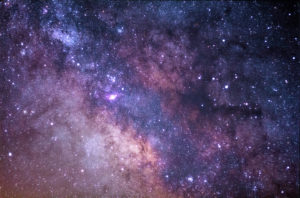
December is a time for remembrance. We connect to others while simultaneously taking stock of another year gone by. A turn of the calendar. Perhaps some more wrinkles and a few more gray hairs. We scroll though celebrity deaths, ongoing political shenanigans, follow the latest natural disaster, or crisis, or war with angst for the future. Maybe we also focus on love and kindness if we’re eternal optimists as many in our humanist camp tend to be. We may glitter and glow from new relationships or mourn the loss of friends and family. One thing is for certain, change is constant both in terms of deprivation and the gains we make across the many social worlds we all inhabit...
When Sagan reminded us that we are all “star stuff” he was speaking about our connection to each other and the universe. An idea that demands we rethink every “us and them” scenario. Every drop of spilled blood over the eons in hate. Every war for resources and territory that have plagued and continues to plague our species on this small blue dot of a planet.
Conversely, Christopher Hitchens was tonally very different from Sagan. Hitchens was a born fighter, a journalist and a provocateur... The Humanist, continues
“Humans have limitations, and no one knows this better than scientists. But a multitude of aspects of the natural world that were considered miraculous only a few generations ago are now thoroughly understood in terms of physics and chemistry. At least some of the mysteries of today will be comprehensively solved by our descendants. The fact that we cannot now produce a detailed understanding of, say, altered states of consciousness in terms of brain chemistry no more implies the existence of a “spirit world” than a sunflower following the Sun in its course across the sky was evidence of a literal miracle before we knew about phototropism and plant hormones.”
—Carl Sagan, 1995
December is a time for remembrance. We connect to others while simultaneously taking stock of another year gone by. A turn of the calendar. Perhaps some more wrinkles and a few more gray hairs. We scroll though celebrity deaths, ongoing political shenanigans, follow the latest natural disaster, or crisis, or war with angst for the future. Maybe we also focus on love and kindness if we’re eternal optimists as many in our humanist camp tend to be. We may glitter and glow from new relationships or mourn the loss of friends and family. One thing is for certain, change is constant both in terms of deprivation and the gains we make across the many social worlds we all inhabit...
When Sagan reminded us that we are all “star stuff” he was speaking about our connection to each other and the universe. An idea that demands we rethink every “us and them” scenario. Every drop of spilled blood over the eons in hate. Every war for resources and territory that have plagued and continues to plague our species on this small blue dot of a planet.
Conversely, Christopher Hitchens was tonally very different from Sagan. Hitchens was a born fighter, a journalist and a provocateur... The Humanist, continues
My comment:
I admire them both, but Sagan was more than just "tonally" different... his less pugilistic style also reflected a greater sympathy for the varieties of ways in which humans seek meaning and value in their lives. Ann Druyan rightly called attention to Carl's appreciation of William James's sense of religion as a feeling of being at home in the cosmos, a sense which he shared but which (like James) he said had less to do with God than with a deep aspiration for "life, more life..." And that makes all the more poignant the early exits of both Carl and Christopher.Sunday, December 10, 2023
The Mystical Catholic Tradition of Jon Fosse
"… I sometimes think that the modern world's true cultural divide is not between believers and unbelievers but between those who think life is a puzzle that is capable of being solved and those who believe it's a mystery that ought to be approached by way of silence and humility. I am a problem solver by disposition, but in my heart I am strongly on the side of the mysterians.
As an institution, the Catholic Church is notably hierarchical and dogmatic, and it has often presented itself not just as a solution to the puzzle of life but as the only possible solution. Yet the church has also always been a home for the kind of mystical, contemplative, apophatic faith that Asle represents. It is the faith of the 13th-century and early 14th-century German friar Meister Eckhart, whom Asle quotes at several points. It is the faith of the 16th-century mystic Teresa of Avila and her follower, John of the Cross. It is the faith of the 20th-century theologian Karl Rahner, who said that "The devout Christian of the future will either be a 'mystic'—someone who has 'experienced something'—or will cease to be anything at all." Each of these figures was formally investigated for heterodox belief during their lifetimes, but all are recognized today as vital communicators of Catholic truth.
It's a mistake to treat their tradition as a watered-down version of the more certain expressions of faith typically associated with organized religion. The most sincere believers I've known have also been the most humble, the most perplexed. It may be that those who feel most powerfully the presence of God in their lives likewise feel most powerfully the impossibility of adequately capturing that presence in words. And it may be that those for whom God is not a symbol or a cudgel but a lived reality find this reality most mysterious.
Of course, this kind of faith has its critics. On the one hand, many believers consider it a capitulation to secular culture, perhaps even heretical in its mystical acceptance of the many paths to God. On the other hand, many atheists consider it an intellectual sleight-of-hand, an effort to launder with philosophical abstractions the fundamentally irrational and intolerant business of belief. You can call that religion if you want, they'll say, but we all know that's not what most people mean by the word.
To which one can only respond as Asle would: You're probably right about that too, but then again maybe it isn't so simple."
https://www.nytimes.com/2023/12/08/opinion/jon-fosse-nobel-god.html?smid=nytcore-ios-share&referringSource=articleShare
The Mystical Catholic Tradition of Jon Fosse
The Mystical Catholic Tradition of Jon Fosse
Tuesday, December 5, 2023
Wednesday, November 8, 2023
Familiar conversions
"…how striking it is that when someone has a religious-conversion experience, it is almost always to the religion or one of the religions that are mainly believed in his or her community. Because there are so many other possibilities. For example, it's very rare in the West that someone has a religious-conversion experience in which the principal deity has the head of an elephant and is painted blue. That is quite rare. But in India there is a blue, elephant-headed god that has many devotees. And seeing depictions of this god there is not so rare. How is it that the apparition of elephant gods is restricted to Indians and doesn't happen except in places where there is a strong Indian tradition? How is that apparitions of the Virgin Mary are common in the West but rarely occur in places in the East where there isn't a strong Christian tradition? Why don't the details of the religious belief cross over the cultural barriers? It is hard to explain unless the details are entirely determined by the local culture and have nothing to do with something that is externally valid.
Put another way, any preexisting predisposition to religious belief can be powerfully influenced by the indigenous culture, wherever you happen to grow up. And especially if the children are exposed early to a particular set of doctrine and music and art and ritual, then it is as natural as breathing, which is why religions make such a large effort to attract the very young.
Or let's take another possibility. Suppose a new prophet arises who claims a revelation from God, and that revelation contravenes the revelations of all previous religions. How is the average person, someone not so fortunate as to have received this revelation personally, to decide whether this new revelation is valid or not? The only dependable way is through natural theology. You have to ask, "What is the evidence?" And it's insufficient to say, "Well, there is this extremely charismatic person who said that he had a conversion experience." Not enough. There are lots of charismatic people who have all sorts of mutually exclusive conversion experiences. They can't all be right. Some of them have to be wrong. Many of them have to be wrong. It's even possible that all of them are wrong. We cannot depend entirely on what people say. We have to look at what the evidence is."
— The Varieties of Scientific Experience: A Personal View of the Search for God by Carl Sagan
https://a.co/bvUn4a7
Put another way, any preexisting predisposition to religious belief can be powerfully influenced by the indigenous culture, wherever you happen to grow up. And especially if the children are exposed early to a particular set of doctrine and music and art and ritual, then it is as natural as breathing, which is why religions make such a large effort to attract the very young.
Or let's take another possibility. Suppose a new prophet arises who claims a revelation from God, and that revelation contravenes the revelations of all previous religions. How is the average person, someone not so fortunate as to have received this revelation personally, to decide whether this new revelation is valid or not? The only dependable way is through natural theology. You have to ask, "What is the evidence?" And it's insufficient to say, "Well, there is this extremely charismatic person who said that he had a conversion experience." Not enough. There are lots of charismatic people who have all sorts of mutually exclusive conversion experiences. They can't all be right. Some of them have to be wrong. Many of them have to be wrong. It's even possible that all of them are wrong. We cannot depend entirely on what people say. We have to look at what the evidence is."
— The Varieties of Scientific Experience: A Personal View of the Search for God by Carl Sagan
https://a.co/bvUn4a7
Compelling revelations
It's easy to imagine divine disclosure more direct than subliminal, Carl Sagan observed:
"...it is perfectly possible to imagine that God, not an omnipotent or an omniscient god, just a reasonably competent god, could have made absolutely clear-cut evidence of His existence. Let me give a few examples.
Imagine that there is a set of holy books in all cultures in which there are a few enigmatic phrases that God or the gods tell our ancestors are to be passed on to the future with no change. Very important to get it exactly right. Now, so far that’s not very different from the actual circumstances of alleged holy books. But suppose that the phrases in question were phrases that we would recognize today that could not have been recognized then. Simple example: The Sun is a star. Now, nobody knew that, let’s say, in the sixth century B.C., when the Jews were in the Babylonian exile and picked up the Babylonian cosmology from the principal astronomers of the time. Ancient Babylonian science is the cosmology that is still enshrined in the book of Genesis. Suppose instead the story was “Don’t forget, the Sun is a star.” Or “Don’t forget, Mars is a rusty place with volcanoes. Mars, you know, that red star? That’s a world. It has volcanoes, it’s rusty, there are clouds, there used to be rivers. There aren’t anymore. You’ll understand this later. Trust me. Right now, don’t forget.”
Or, “A body in motion tends to remain in motion. Don’t think that bodies have to be moved to keep going. It’s just the opposite, really. So later on you’ll understand that if you didn’t have friction, a moving object would just keep moving.” Now, we can imagine the patriarchs scratching their heads in bewilderment, but after all it’s God telling them. So they would copy it down dutifully, and this would be one of the many mysteries in holy books that would then go on to the future until we could recognize the truth, realize that no one back then could possibly have figured it out, and therefore deduce the existence of God.
There are many cases that you can imagine like this. How about “Thou shalt not travel faster than light”? Okay, you might argue that nobody was at imminent risk of breaking that commandment. It would have been a curiosity: “We don’t understand what that one’s about, but all the others we abide by.” Or “There are no privileged frames of reference.” Or how about some equations? Maxwell’s laws in Egyptian hieroglyphics or ancient Chinese characters or ancient Hebrew. And all the terms are defined: “This is the electric field, this is the magnetic field.” We don’t know what those are, but we’ll just copy them down, and then later, sure enough, it’s Maxwell’s laws or the Schrödinger equation. Anything like that would have been possible had God existed and had God wanted us to have evidence of His existence. Or in biology. How about, “Two strands entwined is the secret of life”? You may say that the Greeks were onto that because of the caduceus. You know, in the American army all the physicians wore the caduceus on their lapels, and various medical insurance schemes also use it. And it is connected with, if not the existence of life, at least saving it. But there are very few people who use this to say that the correct religion is the religion of the ancient Greeks, because they had the one symbol that survives critical scrutiny later on.
This business of proofs of God, had God wished to give us some, need not be restricted to this somewhat questionable method of making enigmatic statements to ancient sages and hoping they would survive. God could have engraved the Ten Commandments on the Moon. Large. Ten kilometers across per commandment. And nobody could see it from the Earth but then one day large telescopes would be invented or spacecraft would approach the Moon, and there it would be, engraved on the lunar surface. People would say, “How could that have gotten there?” And then there would be various hypotheses, most of which would be extremely interesting.
Or why not a hundred-kilometer crucifix in Earth orbit? God could certainly do that. Right? Certainly, create the universe? A simple thing like putting a crucifix in Earth orbit? Perfectly possible. Why didn’t God do things of that sort? Or, put another way, why should God be so clear in the Bible and so obscure in the world?
I think this is a serious issue. If we believe, as most of the great theologians hold, that religious truth occurs only when there is a convergence between our knowledge of the natural world and revelation, why is it that this convergence is so feeble when it could easily have been so robust?
So, to conclude, I would like to quote from Protagoras in the fifth century B.C., the opening lines of his Essay on the Gods:
About the gods I have no means of knowing either that they exist or that they do not exist or what they are to look at. Many things prevent my knowing. Among others, the fact that they are never seen."
--The Varieties of Scientific Experience: A Personal View of the Search for God by Carl Sagan, Ann Druyan
==
But of course, proof denies faith...
Subscribe to:
Posts (Atom)