Am I the only person who actually had a shock to my system when I read the first chapter of the book? I've spent a lot of time thinking about what meaning is without an omnipotent being calling the shots, but far less time thinking about the third wave: my mind is just my brain.
I DON'T LIKE IT.
I spend a lot of time with my mind, it's very important to me. I don't want to imagine it as being just a series of neurotransmitters shooting sparks. Especially because I have a mental illness. I always separate the two levels of consciousness that I have: regular brain is more like "mind" and is reasonable, calm and coherent. "Mean Brain" is the one that tells me I suck, am terrible at everything, no one likes me and there's no point to anything. It's the panic mode. I've always attributed Mean Brain to my wonky brain chemicals, which are less wonky when getting treatment. But if my mind is just my brain, it's not my mind telling Mean Brain to sit down and be quiet. That means my brain is talking to my brain: self, sit down and shut up while the same self takes over.
I'm sure if I looked into the science of different regions of the brain and how the anxiety part is probably the lizard brain part, it would be more clear and I'd feel less jarred by these thoughts...of my brain...not my mind. Oof.
See you in class, comrades.
Tuesday, February 4, 2020

Monday, February 3, 2020
Honors Lecture: "There is a tomorrow"
Climate change honors lecture from Osopher
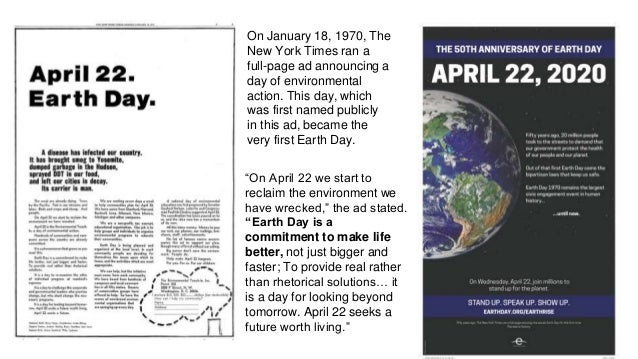

Dean Fischer (Basic and Applied Sciences) thought I may have been too optimistic. My response:
https://mtsunews.com/honors-lecture-series-climate-change-2020/
"Unless someone like you cares a whole awful lot, nothing is going to get better. It's not." https://t.co/df9U7mlik3— Phil Oliver (@OSOPHER) February 4, 2020
Dean Fischer (Basic and Applied Sciences) thought I may have been too optimistic. My response:
I often share a deep pessimism about the future, reflecting on the lapses of the recent past. On the other hand, I wouldn't want to encourage young people to "panic" in the face of the daunting obstacles before them. I'm a devotee of William James's "will to believe" idea, the notion that in dire circumstances requiring a heroic response - the climate crisis is certainly that - it's crucial that agents believe in their own ability to effect change. That's why I cited Michael Chabon's confident response to his little boy's query about the future existence of humans. But you were right, those of us who came of age in the 70s have plenty of cause for a lack of confidence... I side with Mark Twain: “There is no sadder sight than a young pessimist, except an old optimist.” (So I don't call myself an optimist, but a meliorist.)
https://mtsunews.com/honors-lecture-series-climate-change-2020/
Owen Flanagan and Meaning
(I previously had Gregg Caruso's video here in this post, but then realized Dr. Oliver already had it in the quiz post. So, instead I decided to include this video from Owen Flanagan.)
I'm really, really enjoying this book on neuroexistentialism! So far, it's helping me to conceptually wrestle with what I take to be the likely consequences of a truly physicalist outlook. Since to most this amounts to a rather grim prospect, the talk by Caruso comes off as encouraging.
I've also read some stuff by the other editor, Flanagan, and he's apparently been at this grindstone for a while. He wrote a book some years ago called The Really Hard Problem: Meaning in a Material World (2007), in which he struggles with the fact that "we are finite material beings living in a material world, or, in Flanagan's description, short-lived pieces of organized cells and tissue." However much we might feel to be more than this--and therefore, very importantly, above and beyond the determining forces that both encompass and enliven the natural world--I'm just not convinced that we are in fact.
The question for me then becomes: isn't it pragmatically desirable to act as if we are freer than such a materialist view logically permits? Here I go back to Caruso, whose talk points to a way out of this conundrum. Looking forward to our discussion about this subject!
("One Enchanted Being: Neuroexistentialism and Meaning,"a brief but very informative response by Flanagan to some critics of the above book, can be found here.)
Best Super Bowl ad
New York Life? (Thanks, Ed.)
Or Bill & the Groundhog in the Jeep?
Or... ?
How about those Chiefs! Hope that wasn't the last winner I pick this year.
And what a half-time show!
But what really matters is: pitchers and catchers report to Spring Training in 9 days...

Or Bill & the Groundhog in the Jeep?
Or... ?
How about those Chiefs! Hope that wasn't the last winner I pick this year.
And what a half-time show!
But what really matters is: pitchers and catchers report to Spring Training in 9 days...
Sunday, February 2, 2020
Happy Groundhog Day (again...)
“Bill Murray is the bodhisattva.” And a god. Not the God.. LISTEN
Some background (and some more) for those who’ve not seen it repeatedely:
In the movie, which enjoys its own seemingly endless cycle of rebirth on cable television, the character played by Mr. Murray is in Punxsutawney, Pa., covering Groundhog Day, Feb. 2, for the fourth year in a row. Frustrated because his career is stalled and by the fact that he can’t seduce his producer, played by Andie MacDowell, he sees his assignment — waiting for a groundhog (or a rat, as Mr. Murray’s character calls it) to see if there will be six more weeks of winter — as the final indignity.
But it isn’t quite. The next day he awakens in the same bed in the same bed-and-breakfast, to the sound of the same tinny clock radio with Sonny and Cher singing ”I Got You Babe” and the babblings of the frighteningly cheerful local D.J., to discover that it is Feb. 2 again.
At first, he uses the repetition to his advantage — he learns French poetry, for example, as part of his scheme to seduce the producer. Then he realizes that he is doomed to spend eternity locked in the same place, seeing the same people do the same things every day. It is not until he accepts his fate and sets about helping people (saving a homeless man from freezing to death, for example) that he is released from the eternal cycle of repetition.
Of course, this being an American film, he not only attains spiritual release but also gets the producer into bed.
Angela Zito, a co-director of the Center for Religion and Media at New York University, screens the film for students in her Buddhism class. She said that ”Groundhog Day” perfectly illustrates the Buddhist notion of samsara, the continuing cycle of rebirth that Buddhists regard as suffering that humans must try to escape (a belief, Dr. Zito noted, that was missed by executives at Guerlain, who, searching for an exotic name, introduced a perfume called Samsara in the 1980’s, overlooking the negative connotations).
”Groundhog Day,” Dr. Zito said, is a cinematic version of the teachings in Mahayana Buddhism, known as ”the greater vehicle.”
”In Mahayana,” she said, ”nobody ever imagines they are going to escape samsara until everybody else does. That is why you have bodhisattvas, who reach the brink of nirvana, and stop and come back and save the rest of us. Bill Murray is the bodhisattva…”
A bodhisattva. Not the.
Saturday, February 1, 2020
Can't hurt to ask
Valid question…🤔 pic.twitter.com/7xGu5lWnnR— Calvin and Hobbes (@Calvinn_Hobbes) February 1, 2020
Subscribe to:
Posts (Atom)