The idea of eternal damnation is neither biblically, philosophically nor morally justified. But for many it retains a psychological allure.
Once the faith of his youth had faded into the serene agnosticism of his mature years, Charles Darwin found himself amazed that anyone could even wish Christianity to be true. Not, that is, the kindlier bits — “Love thy neighbor” and whatnot — but rather the notion that unbelievers (including relatives and friends) might be tormented in hell forever.
It’s a reasonable perplexity, really. And it raises a troubling question of social psychology. It’s comforting to imagine that Christians generally accept the notion of a hell of eternal misery not because they’re emotionally attached to it, but because they see it as a small, inevitable zone of darkness peripheral to a larger spiritual landscape that — viewed in its totality — they find ravishingly lovely. And this is true of many.
But not of all. For a good number of Christians, hell isn’t just a tragic shadow cast across one of an otherwise ravishing vista’s remoter corners; rather, it’s one of the landscape’s most conspicuous and delectable details.
I know whereof I speak. I’ve published many books, often willfully provocative, and have vexed my share of critics. But only recently, in releasing a book challenging the historical validity, biblical origins, philosophical cogency and moral sanity of the standard Christian teaching on the matter of eternal damnation, have I ever inspired reactions so truculent, uninhibited and (frankly) demented... (continues)
Friday, January 10, 2020

Thursday, January 9, 2020
An existential threat
The "subordination of the finite to the eternal," whatever its appeal to religious sensibilities, is
not the right mindset with which to tackle climate change. Religious minds, or some kinds at least, might in that respect themselves pose an existential threat to our lives.
Martin Hagglund:
"...climate change and the possible destruction of the earth cannot be seen as an existential threat from the standpoint of religious faith... If you have religious faith, you believe that all finite life can be terminated and yet what is truly valuable will remain."
Tuesday, January 7, 2020
Black atheists


A Qualitative Study of Black Atheists
"Don’t Tell Me You’re One of Those!"
DANIEL SWANN
A Qualitative Study of Black Atheists: "Don’t Tell Me You’re One of Those" is an interdisciplinary examination of a group that is rarely the study of inquiry, Black Atheists. Using in-depth, qualitative interviews, Daniel Swann builds a foundation for understanding Black Atheist identities, how Black Atheists conceive of themselves, how they perceive, internalize, and manage stigma, how they view in-group belonging, and how they understand their experiences as Atheists to be racialized. The author argues these unique circumstances have produced a distinctive identity at this particular intersection of race and religion.
Details
Author
TOC
Reviews
Lexington Books
Pages: 224 • Trim: 6 x 9
978-1-4985-9239-0 • Hardback • January 2020 • $95.00 • (£65.00)
978-1-4985-9240-6 • eBook • January 2020 • $90.00 • (£60.00) (coming soon)
Series:Religion and Race
Subjects:Social Science / Sociology of Religion, Social Science / Black Studies (Global)
Monday, January 6, 2020
Thursday, January 2, 2020
"Better than a religion"
A Thousand Small Sanities: The Moral Adventure of Liberalism
by
 ...a stirring defense of liberalism against the dogmatisms of our time
Not since the early twentieth century has liberalism, and liberals, been under such relentless attack, from both right and left. The crisis of democracy in our era has produced a crisis of faith in liberal institutions and, even worse, in liberal thought.
A Thousand Small Sanities is a manifesto rooted in the lives of people who invented and extended the liberal tradition. Taking us from Montaigne to Mill, and from Middlemarch to the civil rights movement, Adam Gopnik argues that liberalism is not a form of centrism, nor simply another word for free markets, nor merely a term denoting a set of rights. It is something far more ambitious: the search for radical change by humane measures. Gopnik shows us why liberalism is one of the great moral adventures in human history--and why, in an age of autocracy, our lives may depend on its continuation. g'r
A vision of liberalism that doesn't concentrate too narrowly on individuals and their contracts but instead on loving relationships and living values can give us a better picture of liberal thought as it's actually evolved than the orthodox picture ...
===
What Smith took from Hume’s demonstration of the limits of reason, the absurdity of superstition, and the primacy of the passions was not a lesson of Buddhist-Stoical indifference but something more like a sense of Epicurean intensity—if we are living in the material world, then let us make it our material.
===
"For on actual examination the nihilism ascribed to liberalism just means pluralism, and its totalitarianism just means tolerance. Even the supposed loss of secure community is in itself a chimera. In my experience, no orthodox marriage on a Greek island is celebrated with as much solemnity and ceremony combined as is a gay marriage on Fire Island in New York. (Gay marriages tend to be extremely well produced.) Liberalism constitutes countless communities of common feeling. They’re just not those of a church or synagogue or mosque. From the devotees who travel to Comic-Con impersonating Chewbacca, to those who travel to Skepticon impersonating Christopher Hitchens, liberalism is full of community. They make friends and lovers along the way—very much in the spirit of medieval pilgrims headed to Canterbury. No, liberalism is dense with community; it simply makes new, nontraditional kinds of community."==="All ideas derive from older ones, as so many Christian ideals derive from pagan philosophical ones. (Darwin got the idea of evolution, though not the evidence for it, from his grandfather.) But few ideas could be more fatuous than that secular ideals are really “just as religious” as religious ideals. The frequent insistence that everyone has a religion, or that liberalism is a religion like any other, is as absurd as saying that a belief in tolerance is the same as a belief in intolerance because both are beliefs, or that a hot bath is the same as a cold bath because both are made of water."==="What distinguishes religions from philosophies and points of view and all the other ways people cope with the difficulties of the world—the only reason to use that specific word rather than some other—is that the religious accept the fact of supernatural intervention at some historical moment. The great faiths may have every shade of humane value, from Sufi mysticism to Islamist militancy. But one can’t really be a Christian without believing that Jesus was resurrected, or a Muslim without believing that the Qur’an was dictated by an angel, or Jewish without believing in either a creator or a chosen people. When you say, as I would, “I’m Jewish, but I don’t believe in either a creator or a chosen people,” what you are saying, precisely, is “I am not a religious Jew.”"==="It seems difficult for people of an authoritarian cast of mind to really accept that there are other people who don’t need authority to be happy—just as people who are haunted by mortality are persuaded that everyone else must be too and that no one can live in recognition of their own impending doom and still believe in constructive work and a meaningful life. John Stuart Mill certainly underwent a spiritual crisis as a young man, which made him unhappy with the colder kinds of rationalism in which he had been instructed by his father. But he never turned toward any idea of God, a conception he regarded as fatuous and unimpressive, not to say self-evidently silly. He turned instead toward a larger and more humane idea of what reform might be, not his father’s ideal of utilitarian measurement but one that took in Mozart, music, love, and literature. He never stopped thinking that alleviating other people’s pain is the first duty of public policy. What liberals have, he thought, is better than a religion. It is a way of life."
Tuesday, December 31, 2019
Being 97
Herbert Fingarette (1921-2018) -
In this film by his grandson he admits that it's harder, at age 97, to be consoled by the Epicurean dismissal of death...
An aging philosopher returns to the essential question: ‘What is the point of it all?’
‘Being 97 has been an interesting experience.’
By the time of his death, the US philosopher Herbert Fingarette (1921-2018) had lived what most would consider a full and meaningful life. His marriage to his wife, Leslie, was long and happy. His career as professor of philosophy at the University of California, Santa Barbara was both accomplished and controversial – his book Heavy Drinking (1988), which challenged the popular understanding of alcoholism as a progressive disease, was met with criticism in the medical and academic communities. In a later book, Death: Philosophical Soundings (1999), Fingarette contemplated mortality, bringing him to a conclusion that echoed the Epicureans: in non-existence, there is nothing to fear. But as Being 97 makes evident, grappling with death can be quite different when the thoughts are personal rather than theoretical. Filmed during some of the final months of Fingarette’s life, the elegiac short documentary profiles the late philosopher as he reflects on life, loss, the many challenges of old age, and those lingering questions that might just be unanswerable.
Director: Andrew Hasse
Producer: Megan Brooks
Website: FTRMGC18 February, 2019
...He enrolled at the University of California intending to major in chemistry, but most of his experiments were flops. He was drafted into the Army and, after serving during World War II, mostly at the Pentagon, returned to the university. There he was captivated by a Bertrand Russell lecture on David Hume and decided to major in philosophy, earning a bachelor’s degree in 1947 and a doctorate in 1949...
“Never in my life will I experience death,” he wrote. “I will never know an end to my life, this life of mine right here on earth.” He added: “People hope never to know the end of consciousness. But why merely hope? It’s a certainty. They never will!”In other words, he agreed with Epicurus. (Being an Epicurean to the end, though, is not so easy.)
In this film by his grandson he admits that it's harder, at age 97, to be consoled by the Epicurean dismissal of death...
An aging philosopher returns to the essential question: ‘What is the point of it all?’
‘Being 97 has been an interesting experience.’
By the time of his death, the US philosopher Herbert Fingarette (1921-2018) had lived what most would consider a full and meaningful life. His marriage to his wife, Leslie, was long and happy. His career as professor of philosophy at the University of California, Santa Barbara was both accomplished and controversial – his book Heavy Drinking (1988), which challenged the popular understanding of alcoholism as a progressive disease, was met with criticism in the medical and academic communities. In a later book, Death: Philosophical Soundings (1999), Fingarette contemplated mortality, bringing him to a conclusion that echoed the Epicureans: in non-existence, there is nothing to fear. But as Being 97 makes evident, grappling with death can be quite different when the thoughts are personal rather than theoretical. Filmed during some of the final months of Fingarette’s life, the elegiac short documentary profiles the late philosopher as he reflects on life, loss, the many challenges of old age, and those lingering questions that might just be unanswerable.
Director: Andrew Hasse
Producer: Megan Brooks
Website: FTRMGC18 February, 2019
Exiting religion, finding a life
Michael Shermer with Amber Scorah — Leaving the Witness: Exiting a Religion and Finding a Life
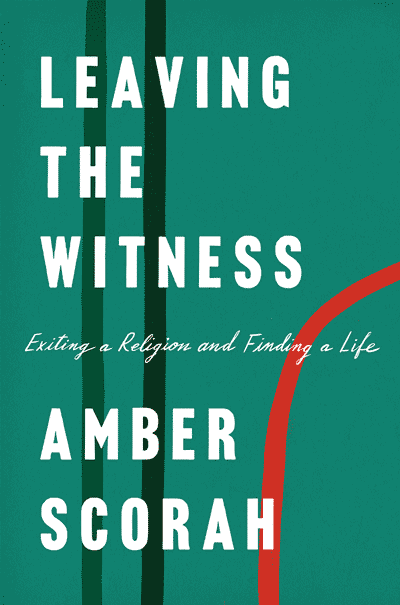
In this revealing conversation Amber Scorah opens the box into the psychology of religious belief to show how, exactly, religions and cults convince members that theirs is the one true religion, to the point, she admits, that she would have gladly died for her faith. As a third-generation Jehovah’s Witness, Amber Scorah had devoted her life to sounding God’s warning of impending Armageddon. She volunteered to take the message to China, where the preaching she did was illegal and could result in her expulsion or worse. Here, she had some distance from her community for the first time. Immersion in a foreign language and culture — and a whole new way of thinking — turned her world upside down, and eventually led her to lose all that she had been sure was true. As a proselytizer in Shanghai, using fake names and secret codes to evade the authorities’ notice, Scorah discreetly looked for targets in public parks and stores. To support herself, she found work at a Chinese language learning podcast, hiding her real purpose from her coworkers. Now with a creative outlet, getting to know worldly people for the first time, she began to understand that there were other ways of seeing the world and living a fulfilling life. When one of these relationships became an “escape hatch,” Scorah’s loss of faith culminated in her own personal apocalypse, the only kind of ending possible for a Jehovah’s Witness. Shunned by family and friends as an apostate, Scorah was alone in Shanghai and thrown into a world she had only known from the periphery — with no education or support system. A coming of age story of a woman already in her thirties, this unforgettable memoir examines what it’s like to start one’s life over again with an entirely new identity. Scorah and Shermer also discuss:
- the legals and logistics of writing a memoir
- the rise of the nones and disbelief and why stories like hers provide social proof for living without religion
- what Jehovah’s Witnesses believe and why they believe it
- what it’s like to go door-to-door witnessing for a religion
- Armageddon and what doomsayers do when the world doesn’t end
- the mindset of the fundamentalist
- why religions are obsessed with female sexuality
- why religions forbid homosexuality
- the psychology of deconversion
- the problem of evil, or why bad things happen to good people
- how she would try to talk someone out of joining ISIS
- what it’s like to be expelled from a religion and be an apostate, and
- how to start your life over when you’ve lost everything.
Amber Scorah is a writer living in Brooklyn, NY. Her articles have been published in The New York Times, The Believer, and USA Today. Prior to coming to New York, Scorah lived in Shanghai, where she was creator and host of the podcast Dear Amber: An Insider’s Guide to Everything China. Leaving the Witness is her first book.
Listen to Science Salon via Apple Podcasts, Spotify, Google Play Music, Stitcher, iHeartRadio, and TuneIn.
Subscribe to:
Posts (Atom)